
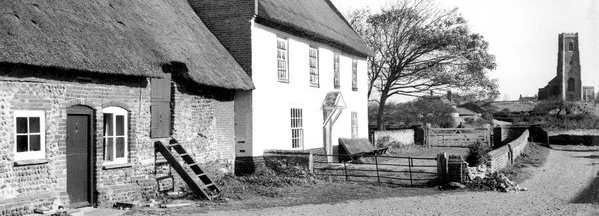
History: Church Farm Cottage, Happisburgh
Church Farm Cottage is part of a collection of buildings collectively part of what was known as Church Farm, which is believed to date from the early 17th century.
Church Farm which included all the buildings in the immediate vicinity was rented out by the Old Stortfordians (1913-1982) Among them were notable visitors the sculptors Henry Moore and Barbara Hepworth who holidayed in Happisburgh in the early 1930s. The pair and their friends often visited the local beach to collect 'iron stones', while the holed flint may have proved inspirational to some of their work.
Much earlier visitors to the beach may have been somewhat less cultured, but helpfully left some of the earliest known human footprints to be discovered in Northern Europe. The fossilised imprints exposed by rough seas at low tide have been the subject of a recent exhibition at the British Museum.
Happisburgh pronounced without the P’s Haysbro, has another less happy history that can be found in the graveyard of St Mary’s church. Crew from the wrecked Nelsonian sailing ship the Invincible 1801 are buried there.
Recently a time and tide bell that once let villagers know when the tide was in, was resurrected and can be found on Happisburgh beach at low tide, not too far from Iconic lighthouse that itself was restored in an episode of Challenge Aneka.
For more information on the village please visit the Happisburgh website.